Why Incomplete Histories Create Real Harm
Incomplete histories are not a technical inconvenience. They represent missing parts of a patient’s life. When clinicians cannot see that story, their decisions become limited and sometimes inaccurate.
The problem is widespread. Many patients receive care across multiple sites, often outside the primary system. Their screenings, chronic conditions, and previous interventions follow no common path. The lack of continuity affects accuracy, engagement, and equity.
How Missing Data Affects Clinical Outcomes
1. Delayed Diagnoses
Critical conditions often take longer to detect when labs, procedures, or specialist notes fail to return to the primary record.
2. Under-Reported Conditions
Claims may show a chronic condition that the EMR has not documented. This leads to incorrect care plans.
3. Missed Screenings
Gaps hide overdue preventive care, especially in high-risk populations.
4. Misclassified Risk Levels
Risk models depend on complete histories. Missing data leads to misaligned care priorities.
The Equity Implications
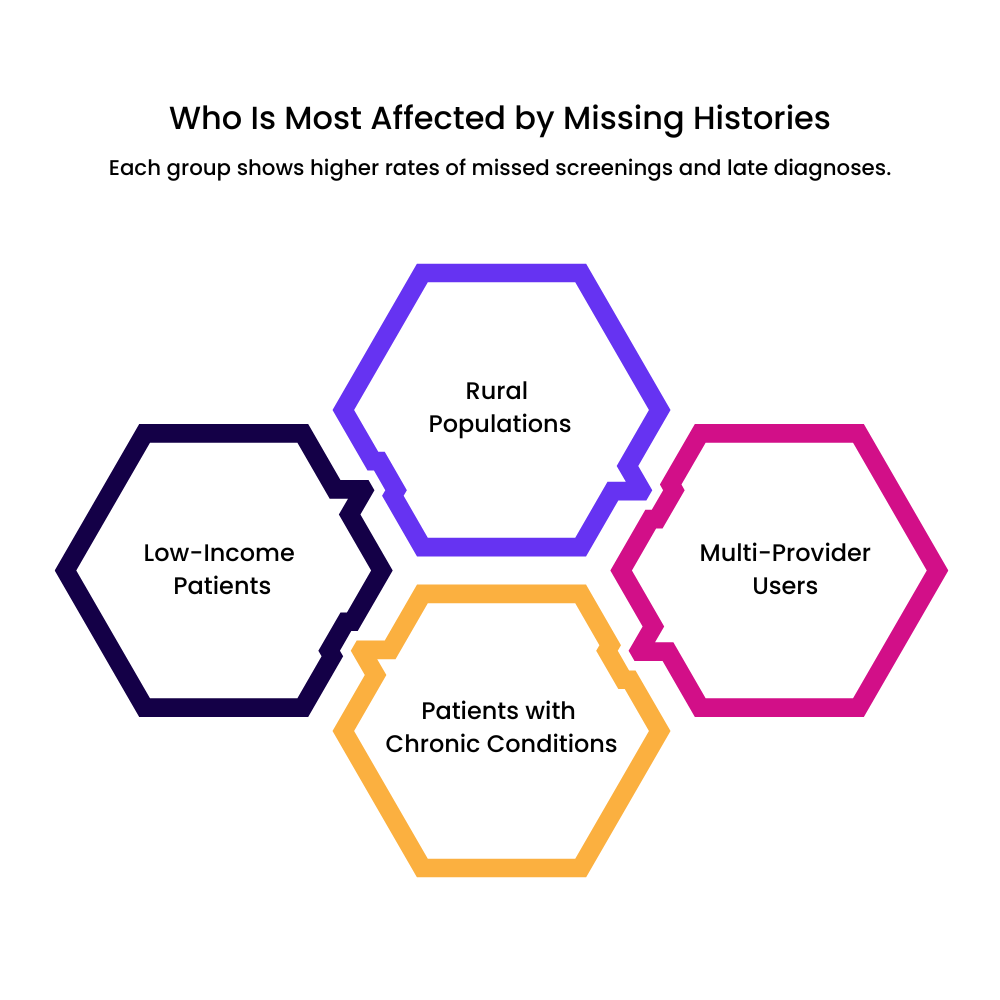
Incomplete records disproportionately affect:
Low-income populations
Rural communities
Patients with inconsistent access to care
Those navigating multiple care settings
When data continuity breaks, inequity grows. Delayed interventions and unmanaged chronic conditions compound over time.
How Longitudinal Data Strengthens Equity
1. Continuous Context for Each Patient
Connected timelines reveal earlier patterns of risk.
2. Data-Driven Outreach
Teams can identify who needs screenings, follow-ups, or chronic care visits.
3. Better Clinical Judgment
Clinicians receive a clear view of comorbidities, recent events, and therapy responses.
4. More Reliable Quality Reporting
Programs that rely on accurate data become more equitable when the data is complete.
Read the full whitepaper to understand the architecture behind real-time harmonization and longitudinal records.