The Cost of Scattered Healthcare Data
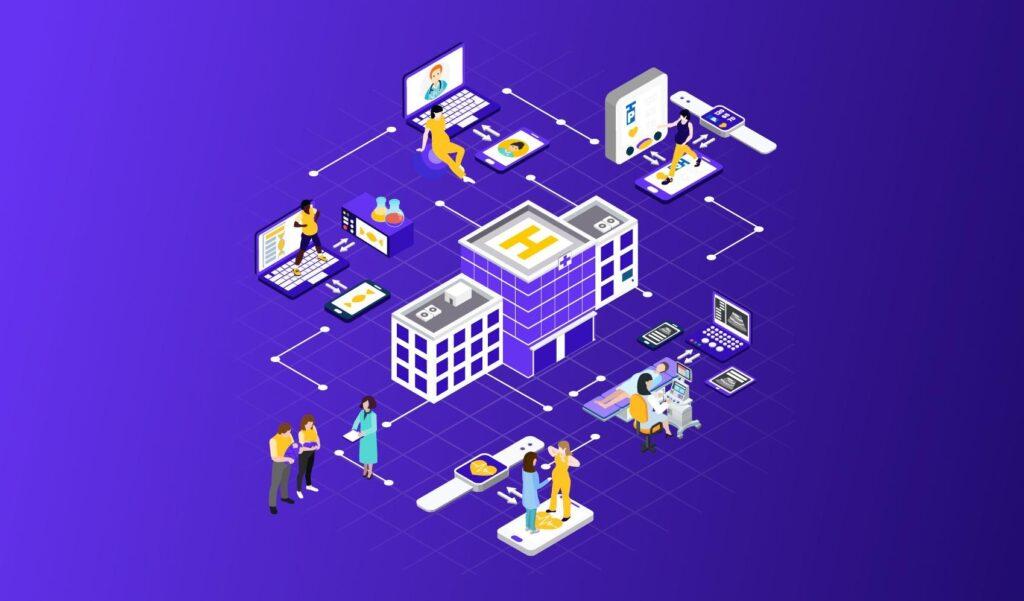
Most clinical decisions rely on understanding a patient’s journey. Yet this journey sits in multiple systems: EHRs, claims, labs, pharmacy systems, ADT feeds, and device platforms. None of these speak the same language.
The issue is not data volume. It is the absence of structure, continuity, and timeliness. Care teams must search across portals, PDFs, and inbox messages to piece together a patient’s history. The gaps create blind spots that affect every decision.
Why Fragmented Data Creates Clinical Blind Spots
1. EMR-Only Views Miss Half the Story
Hospital visits, external specialist notes, and community screenings rarely flow back into the EMR. This leads to incomplete assessments.
2. Claims Are Rich but Always Delayed
Claims confirm what happened but arrive too late to drive proactive care.
3. ADT Alerts Without Context Cause Noise
Admission and discharge alerts trigger action, but without accompanying history, teams cannot prioritize effectively.
4. Labs and Imaging Flow Through PDFs
Unstructured formats prevent analytics from capturing meaningful patterns.
How a Harmonization Layer Converts Data Into Signals
A harmonization layer sits between source systems and analytical or clinical environments. It unifies records into a consistent structure.
What the Layer Does
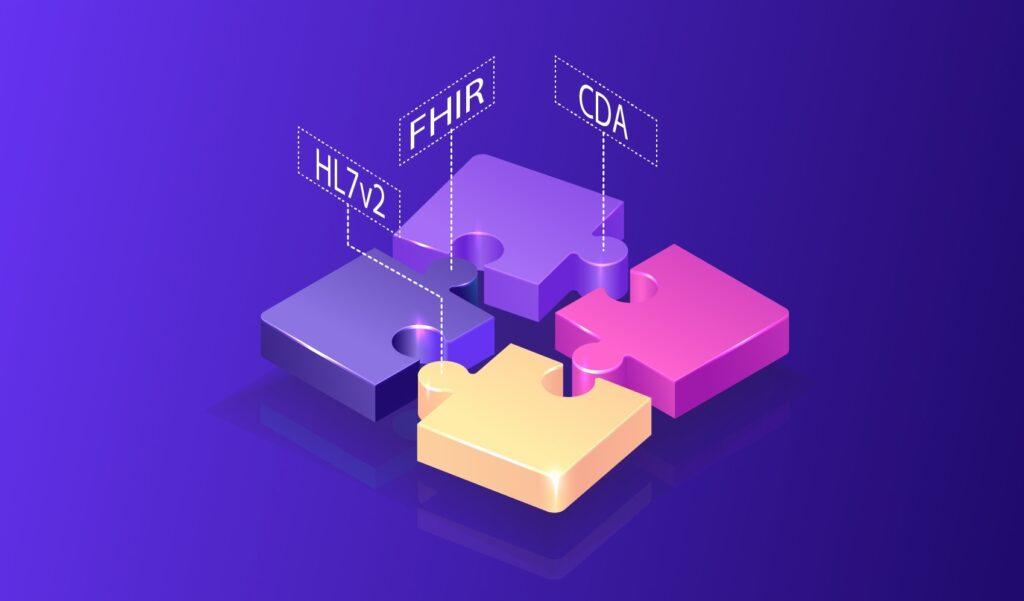
Standardizes formats using FHIR and coding systems
Resolves patient identities across systems
Adds timestamps and event sequencing
Removes duplicates
Creates a continuous patient narrative
This transforms siloed data into time-aware signals that care teams can trust.
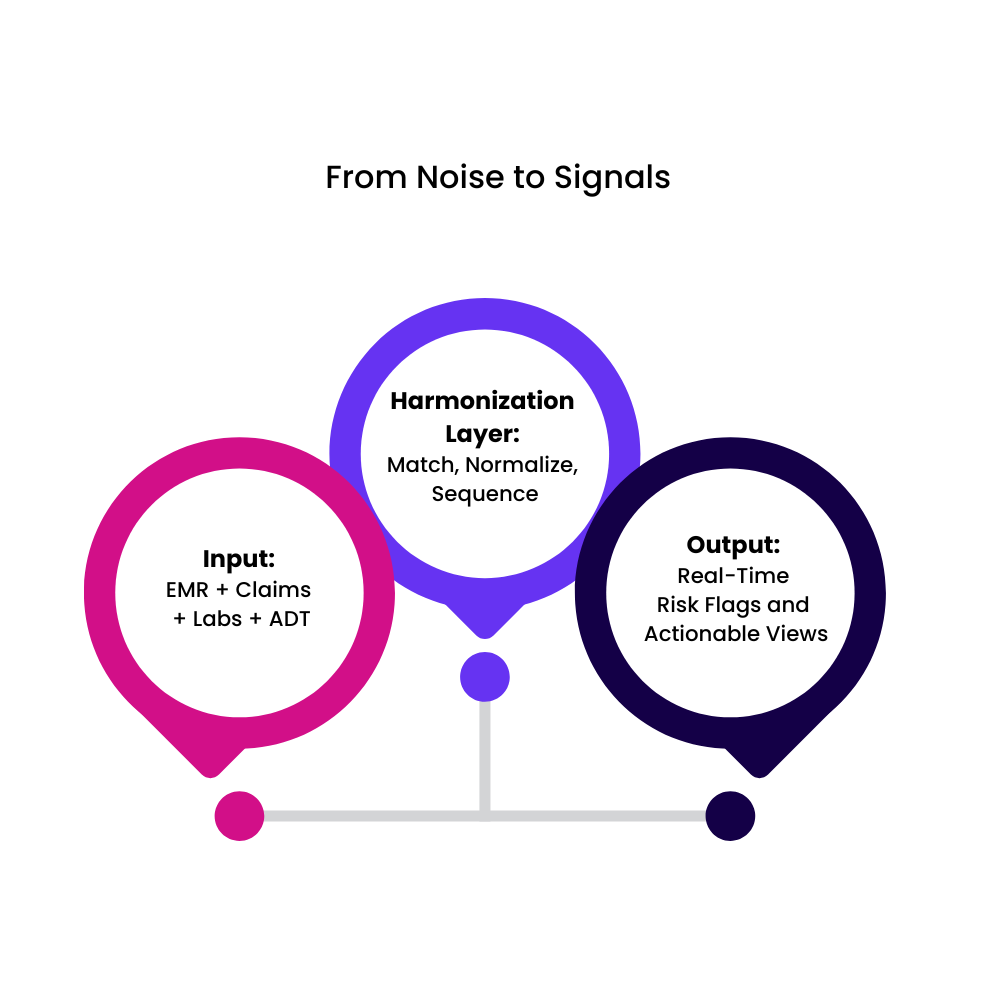
Outcome Improvements with Real-Time Signa
1. Early Risk Prediction
Continuous signals reveal patterns such as rising lab markers or frequent urgent visits.
2. Reduced Readmissions
Linking ADT alerts with clinical histories helps teams act within hours, not days.
3. Faster Care Gap Closure
When gaps are detectable in real time, outreach teams can act immediately.
4. Better Care Coordination
Unified signals give all teams the same view of patients.
Read the full whitepaper to understand the architecture behind real-time harmonization and longitudinal records.